When in Doubt, Just Do It
The title kind of explains itself.
My partner and I were watching The Voice Kids Portugal (she loves those shows), and one six-year-old boy went on stage to sing CASA (which, side note, is a very good song IMHO).
Before singing, the kid casually told one of the judges:
“I’ll start, and then you can join.”
The funny part is that the judge was actually Cristóvam, one of the authors and singers of the song itself.
That kind of innocence, confidence, and courage is something we slowly lose over time. Unfortunately, as we grow older, we become more self-aware, more afraid of judgment, and more concerned about looking foolish.
But I also think there are ways to recover it.
Long before I was born, Susan Jeffers published Feel the Fear and Do It Anyway[1], and almost 40 years later the idea aged like wine.
Back in 2015, a much younger Ezequiel went to a Hackday organized by the Lemann Foundation. The Fundação Lemann[2] is one of the largest non-profit organizations focused on education and social impact in Brazil, supporting projects around public education, leadership, and technology.
I wrote a little bit about that event years ago in another post: Hackathon Hackday Fundação Lemann 2015[3].
The funny thing is that the other teams were much, much more experienced than me. Due to the importance of the event and the people involved, there were some incredibly talented developers there.
Meanwhile, I was mostly there because I wanted to practice coding. At the time I was transitioning from Mechatronics into a Computer Science career and trying to learn as much as possible.
Years later, a colleague asked me if I knew Mauricio Aniche. I said no and asked why.
Then he sent me an old Facebook album from the Hackday:
One of the teams there had basically:
- Maurício Aniche — currently CTO at Alura and previously a Computer Science professor at TU Delft.
- Guilherme Silveira — co-founder of Alura, one of the biggest technology education ecosystems in Brazil, and an international gold medalist in mathematics.
Both are extremely high-caliber developers.
And honestly?
If I had to go to that Hackday today, I probably would not.
That is exactly the reason for this post.
As we get older, gain experience, become more self-aware, or simply more afraid of judgment, we slowly lose that grip a little bit. We start calculating risks too much. We start thinking about how we may look instead of simply doing the thing.
Another example happened around the same time.
I shared a tiny library on GitHub after collecting pieces of code from old Chinese forums and spending nights debugging how to communicate with iOS devices through the FSK protocol:
It was messy. Barely documented. Full of experimentation.
Months later, I received a GitHub issue saying:
"Looks like this delegate is not working."
I checked it, fixed the bug, and life moved on.
But the person who opened the issue turned out to be a researcher from MIT, and later the project was actually used in their research:
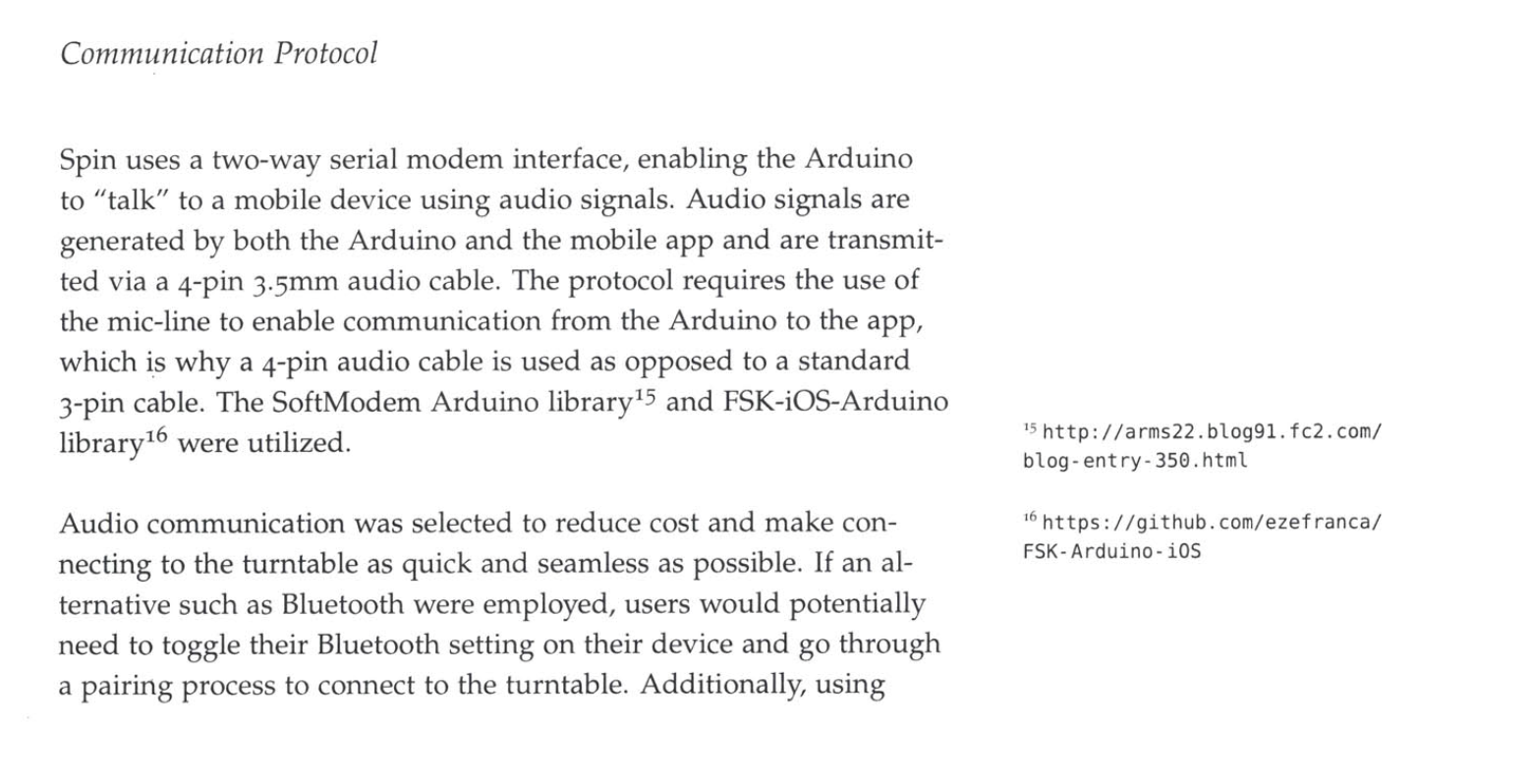
Page 106. MIT Research Reference[6]
Funny enough, their supervisor was Mitchel Resnick, one of the creators of Scratch.
If I had to publish that repository today, I honestly think I probably would not.
I would overthink the architecture.
I would worry that someone would say the code was bad.
I would think it was not organized enough.
Insecurity and fear.
And that is how we return to the title:
When in doubt, just do it.
More recently, I created a very small Swift BibTeX library for myself because I needed it for a personal academic note-taking project based on the Zettelkasten method[7].
I almost kept it private.
Instead, I decided to publish it.
To my surprise, one of the major references in the Zettelkasten community publicly praised the library:
That was surreal.
I had been reading his blog for months trying to learn the method, and suddenly the same person appeared in something I built saying:
“Hey, this is cool.”
Another example.
Later this year I released PortuGAS[9].
I launched it with very little confidence. Really, very little.
It was not particularly innovative.
It was not revolutionary.
It was not even solving a new problem.
And yet today, more than 1.12K people use it.
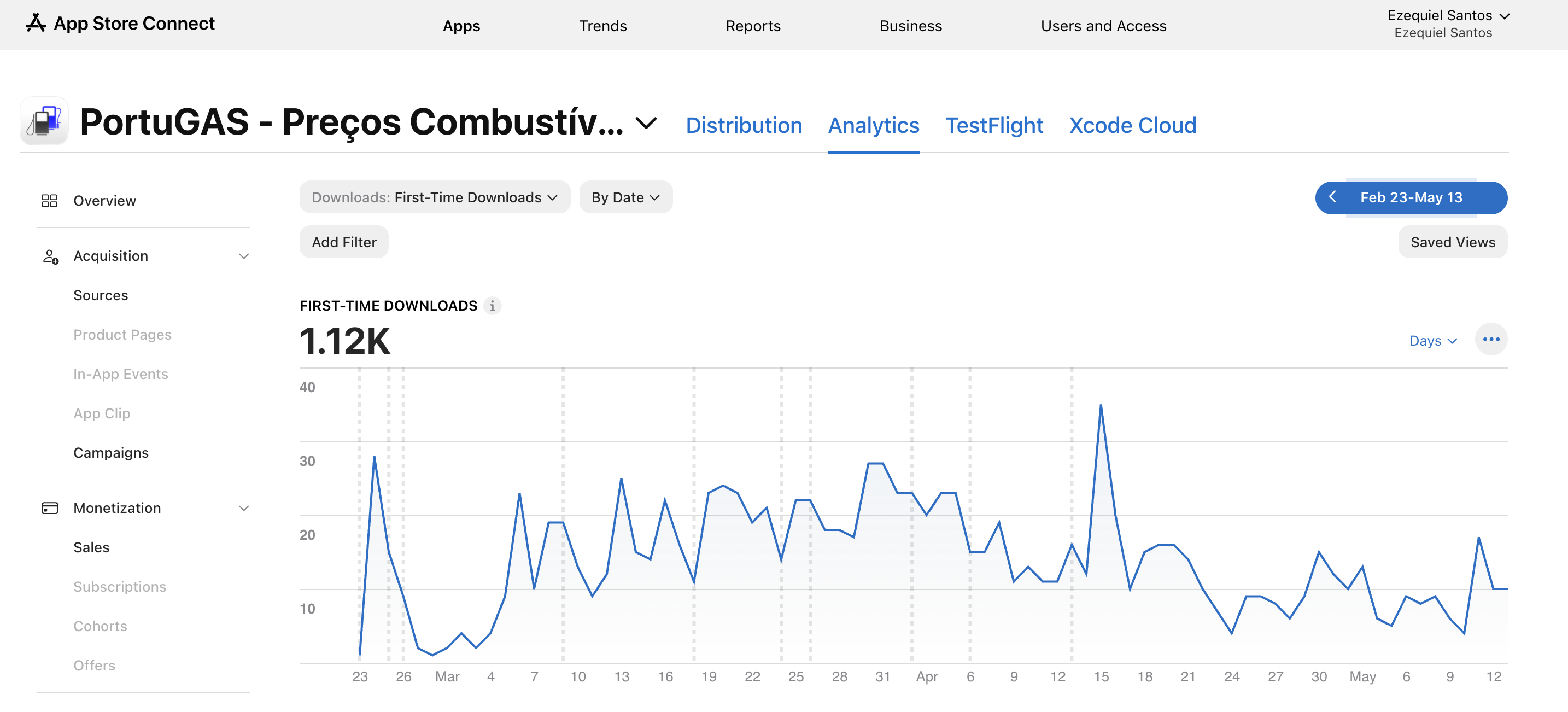
Even this post almost did not happen. Part of me thought people would read this as self-congratulatory or self-bragging. But honestly, most of these stories were not confidence — they were just innocence, curiosity, and inexperience.
I simply did things before learning enough reasons not to.
I spent a ridiculous amount of time wondering whether I should publish this post.
Then I remembered the point itself:
When in doubt, just do it.
Fear has a funny way of making unlikely things feel inevitable.
A single bad comment, someone judging your code, your writing, or your project, suddenly feels more important than hundreds of people who may quietly enjoy or benefit from it.
And this is not just insecurity talking. Psychologists and behavioral economists such as Daniel Kahneman and Amos Tversky spent decades researching how humans perceive risk, and one of their conclusions was that our brains naturally overweight negative outcomes relative to positive ones[10]. Later studies around the “negativity bias” showed the same thing: bad experiences tend to affect us more strongly than good ones[11][12].
Which honestly makes sense from an evolutionary perspective. Thousands of years ago, ignoring danger could get you killed. But the internet is not a prehistoric forest. Someone online saying your side project sucks is not a tiger.
The weird thing is that fear tricks us into treating criticism as certainty while ignoring probability entirely. Statistically speaking, if enough people see what you made, it is almost inevitable that some people will dislike it. But it is also almost inevitable that some people will love it, find it useful, or even need it. Audience diversity at an internet scale practically guarantees both outcomes.
That is why fear is such a bad estimator of reality. It magnifies the risk and hides the upside.
If I had listened to fear every time, I would never have gone to that Hackday, never open-sourced random projects, never released PortuGAS, and probably never even published this post.
So next time you are in doubt, you already know.
Just do it.
I will try too.
References
- Jeffers, S. (1987). Feel the Fear and Do It Anyway.
- Fundação Lemann.
- Hackathon Hackday Fundação Lemann 2015.
- Hackday de Dados de Tecnologia na Educação.
- FSK-Arduino-iOS.
- MIT Research Reference.
- Zettelkasten Method.
- Swift Package Index Discussion.
- PortuGAS.
- Kahneman, D., & Tversky, A. (1979). Prospect Theory: An Analysis of Decision under Risk.
- Baumeister, R. F., Bratslavsky, E., Finkenauer, C., & Vohs, K. D. (2001). Bad Is Stronger Than Good.
- Rozin, P., & Royzman, E. B. (2001). Negativity Bias, Negativity Dominance, and Contagion.
Comments
Read or join the conversation with a GitHub account.